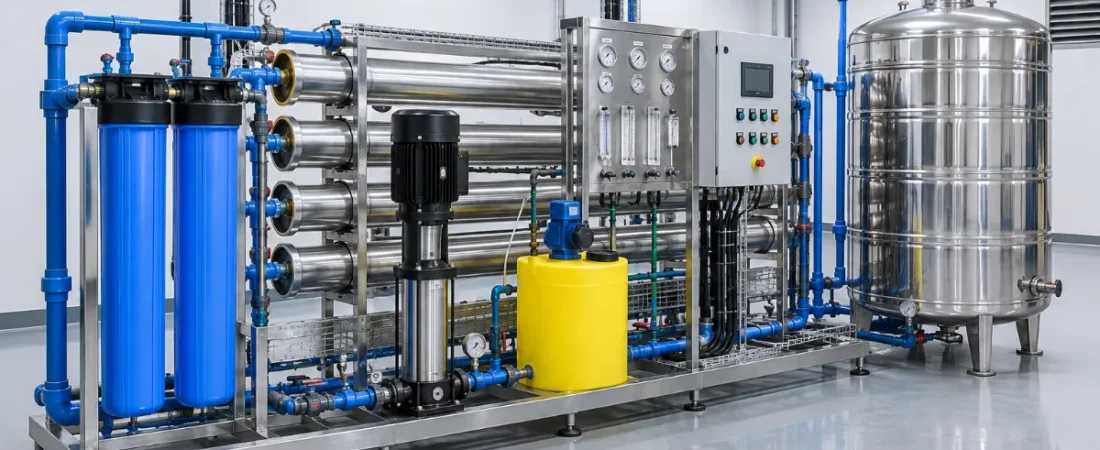
Boiler feed water treatment in Oman is where plants quietly lose money. A boiler fed on softened municipal water without the rest of the programme will scale, foam, corrode its economiser and fail a tube within a few years. This guide sets out the six water limits that matter, the treatment train that holds them, and the operating practice that keeps a boiler alive in Omani conditions.
What this guide covers
- Why Omani feed water is difficult
- The six limits you should never exceed
- The treatment train, stage by stage
- Internal chemical dosing
- Blowdown and cycles of concentration
- Daily and weekly testing
- What poor treatment actually costs
- FAQ
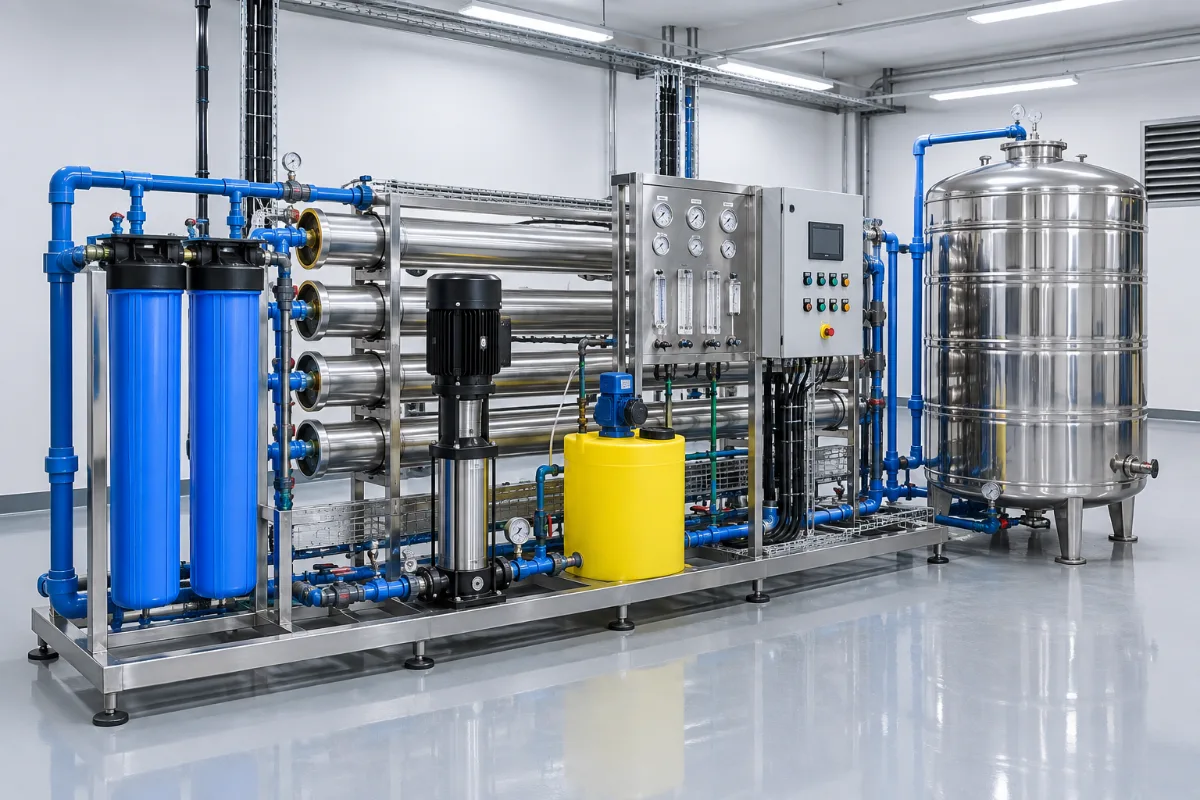
Why boiler feed water treatment in Oman is harder than the textbook case
Most industrial sites in Oman run on desalinated municipal supply, well water, or a blend of the two. Desalinated supply arrives low in hardness but often with aggressive carbon dioxide and little buffering, which attacks the condensate return line rather than the boiler itself. Well water arrives with high hardness, high silica, high chloride and sometimes iron and manganese. The two problems are opposite, and a treatment train copied from another site usually solves neither.
Ambient temperature compounds it. Deaerator and feed tank water sits hot, oxygen solubility changes, and chemical residuals deplete faster than the labels assume. Any serious approach to boiler feed water treatment in Oman starts with a full feed water analysis rather than a brochure.
The six limits you should never exceed
These are the figures we design to for a typical low and medium pressure industrial boiler. Your boiler maker plate values override anything general, and high pressure or steam turbine service is stricter again.
- Total hardness in feed water: effectively zero, under 1 ppm as CaCO3. Hardness is what forms calcium carbonate and calcium sulphate scale on the hottest tube surfaces. One millimetre of scale costs several percent of fuel.
- Dissolved oxygen: under 0.02 ppm at the feed pump. Oxygen pitting puts holes in tubes and the economiser, and unlike scale it is not recoverable by cleaning.
- Silica in boiler water: under 150 ppm for low pressure, far lower as pressure rises. Silica forms a glass-hard scale that acid cleaning will not touch and it carries over into the steam to deposit on turbine blades.
- Boiler water total dissolved solids: 2000 to 3500 ppm for low pressure shell boilers, controlled by blowdown. Above that you get carryover, wet steam and foaming.
- pH in boiler water: 10.5 to 11.5. Below 10.5 and the steel corrodes; above 11.5 and you risk caustic embrittlement. Feed water pH should be held 8.5 to 9.5 to protect the pre-boiler line.
- Iron and copper: under 0.05 and 0.01 ppm. These arrive from condensate line corrosion and tell you the pre-boiler side is failing before the boiler shows it.
The published feedwater characteristic tables set these out by pressure band, and the ASME consensus guidelines remain the reference most boiler makers write into their warranty conditions.
The treatment train, stage by stage
A working train for boiler feed water treatment in Oman is usually some subset of the following, selected by the feed analysis and the boiler pressure.
Multimedia filtration first, to take out suspended solids and turbidity, especially on well water. Iron and manganese removal goes here too where the analysis demands it.
Softening next. Duplex sodium cycle softeners sized so one vessel is always in service while the other regenerates, because an unsoftened slug during regeneration is enough to start scale. We specify duplex on every boiler application, never simplex.
Reverse osmosis or demineralisation where silica, TDS or chloride exceed what softening alone can fix. On high silica well water this is not optional. RO removes around 97 percent of dissolved solids and most of the silica; a mixed bed or two-bed DM polishes further where the pressure band demands it. Our page on industrial water treatment in Oman covers the sizing approach.
Deaeration to strip oxygen and carbon dioxide mechanically before chemistry has to deal with it. A thermal deaerator running correctly gets dissolved oxygen to around 0.007 ppm; without one you carry the whole oxygen load on chemical scavenger, which costs more every single day.
Condensate recovery, which is the most under-used saving on Omani sites. Returned condensate is hot, almost pure water that you have already paid to treat. Every percent you recover cuts fuel, water and chemical spend together. It needs a conductivity trip to dump contaminated returns.
Internal chemical dosing
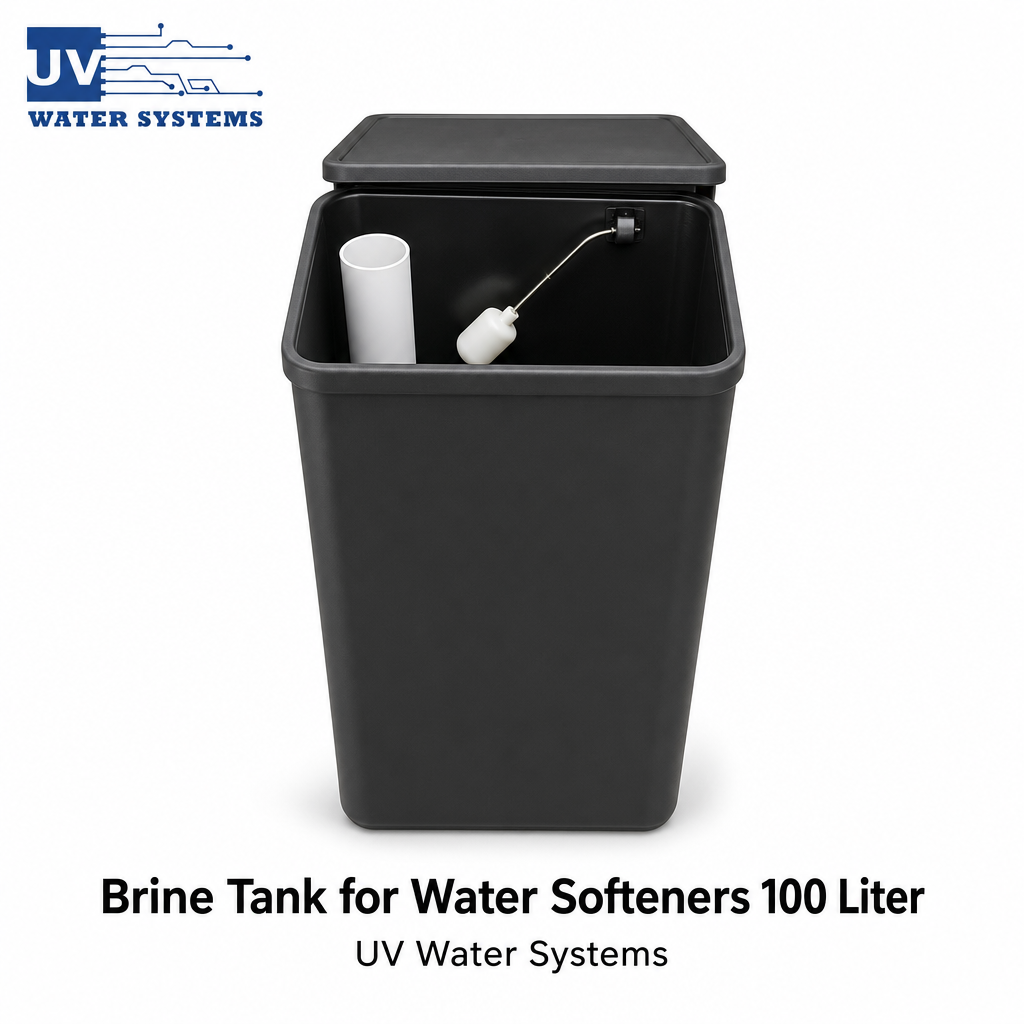
Three dosing lines cover most installations. An oxygen scavenger into the feed tank or deaerator storage, sulphite for low pressure or a volatile alternative where food contact or high pressure rules out sulphite. A phosphate or polymer scale and sludge conditioner into the boiler drum to precipitate residual hardness as a mobile sludge that blowdown removes. An amine into the steam line to neutralise carbonic acid and film the condensate return.
Dose by measured residual, not by a fixed litres per day figure. We set up dosing on Emec metering pumps proportional to feed water flow, with a tested residual logged each shift.
Blowdown and cycles of concentration
Blowdown is the only mechanism removing dissolved solids from the boiler. Too little and TDS climbs until the boiler foams and carries over. Too much and you throw away hot treated water and the fuel used to heat it.
Set continuous surface blowdown from a conductivity controller against your TDS limit, and keep bottom blowdown short and frequent for sludge rather than long and occasional. Fit a blowdown heat recovery exchanger on anything above a few tonnes per hour; it typically pays back inside two years on Omani fuel prices.
Daily and weekly testing
Daily: boiler water TDS or conductivity, pH, phosphate or polymer residual, sulphite residual, and feed water hardness. Weekly: silica, alkalinity, iron, and a condensate conductivity and pH check. Log it on a sheet that the plant manager actually reads, because the value of boiler feed water treatment in Oman is in catching a drift in week one rather than a tube failure in year three.
A softener that has stopped regenerating properly shows up as feed hardness the same day. That one test, done daily, prevents most of the scale damage we are called in to assess.
What poor treatment actually costs
Scale conducts heat about one fiftieth as well as steel. A thin film on the fire side raises flue gas temperature and fuel consumption measurably, and the metal underneath runs hotter than design until it bulges or splits. Oxygen pitting is worse because it is invisible until a tube leaks. Carryover from high TDS wets the steam, damages traps and spoils product in any process using direct steam.
Against that, a correctly sized treatment train plus a dosing and testing routine is a small recurring cost with a known payback. We size, supply, install and service boiler water systems for plants across Oman, including softeners, RO and DM units, deaerator chemistry and dosing skids. Call +968 9763 7786 or send your feed water analysis for a sizing proposal, or request a free water test in Oman.
Frequently asked questions
Is a softener enough for a small steam boiler?
For a small low pressure boiler on desalinated municipal supply with good condensate return, a duplex softener plus proper dosing and blowdown can be enough. On well water, or wherever silica and TDS are high, it is not, and the scale appears within the first year.
Do I need RO or DM for my boiler?
It depends on the feed analysis and the operating pressure. High silica, high TDS, high chloride or a high pressure boiler points to RO, and steam turbine service usually needs DM polishing after RO. Send the analysis and the boiler plate data and the answer is straightforward.
How often should a boiler be inspected internally?
Follow your insurer and the Omani statutory inspection requirement for pressure vessels. Open the boiler at that interval and photograph the tube surfaces every time, because the trend across inspections tells you whether your water programme is working better than any single reading does.
Can I treat boiler water without a deaerator?
You can, with a higher oxygen scavenger dose and a hot feed tank, and many small Omani installations run that way. It costs more in chemical every day and gives you less margin on an upset. On anything above a few tonnes per hour the deaerator pays for itself.
Who should own boiler feed water treatment in Oman
On most sites the boiler is someone’s responsibility and the water feeding it is nobody’s. The operator watches pressure and steam demand, the maintenance contractor handles burners and valves, and the feed water quietly drifts out of specification until a tube fails. Boiler feed water treatment in Oman works when one named person holds the daily log: conductivity, pH, hardness and the blowdown record, checked against the limits in the table above and signed.
Give that person written limits, a test kit they can actually use, and a monthly review with whoever supplies the chemicals. Insurance surveys and brand or HSE audits ask for the log before they ask for anything else, and a complete log is also the cheapest evidence you have when a warranty claim on a boiler or an economiser is argued.
What a boiler feed water treatment in Oman service contract covers
- Softener servicing and hardness checks on the treated line, with resin condition reported
- Oxygen scavenger, alkalinity builder and amine dosing set against your actual load, not a generic dose rate
- Blowdown and cycles-of-concentration review, so you are not boiling away fuel you paid for
- Monthly feed, boiler and condensate testing with a dated report
- Operator training on the daily log and the action limits
UV Water Systems handles boiler feed water treatment in Oman for hotels, laundries, food plants and industrial steam users across Muscat, Sohar and Salalah. Call +968 9763 7786 or email sales@waterfilteroman.com for a water analysis and a treatment proposal for your boiler.
For the service side, see our boiler water treatment in Oman page — packages, AMC scope and how to start.