
Description
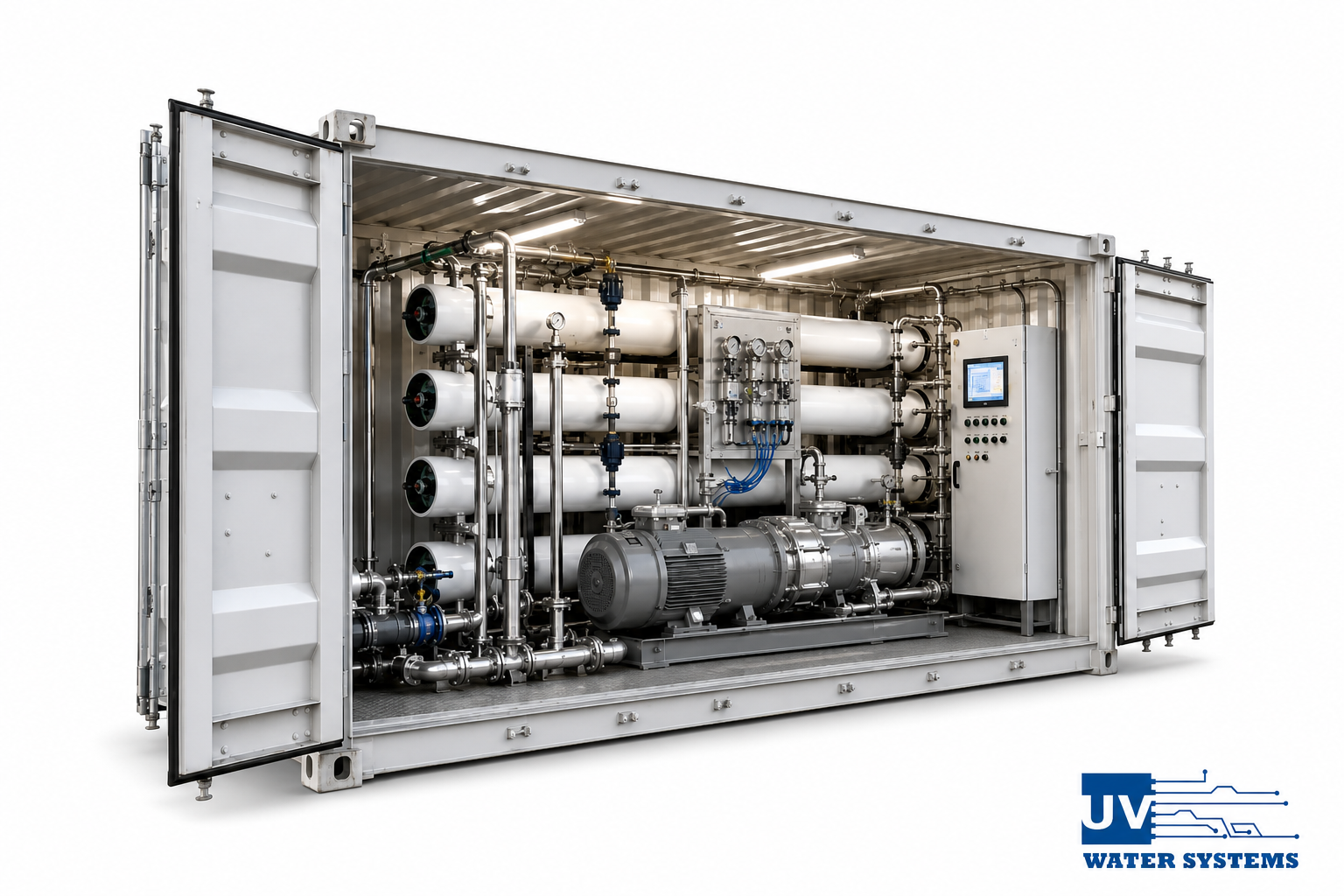
Seawater Desalination System (SWRO) – 50 m3/day
This seawater desalination system turns Arabian Sea and Gulf of Oman feed water into 50 m3/day (approximately 13,200 GPD) of potable water that meets Omani drinking water standards. It suits mid-size coastal resorts of 50-80 rooms, large private compounds, fishing harbours with supporting facilities, and remote coastal industrial sites with no municipal connection. UV Water Systems builds the plant in Muscat as a containerised or skid-mounted unit, so it can be installed anywhere along Oman’s coastline from Musandam to Salalah.
Why This Seawater Desalination System Fits Oman
Seawater along the Oman coast runs 38,000-42,000 mg/L TDS, well above the global average. Brackish water RO membranes cannot handle that load. This plant uses SWRO-rated membranes operating at 55-70 bar, with duplex stainless steel wetted parts on the high-pressure side to resist chloride attack. Summer feed temperatures above 33 degrees C are factored into the membrane count during sizing, so output holds at 50 m3/day through the hottest months instead of dropping when demand peaks.
Technical Specifications
- Capacity: 50 m3/day (~13,200 GPD) from 38,000-42,000 mg/L seawater
- Operating pressure: 55-70 bar
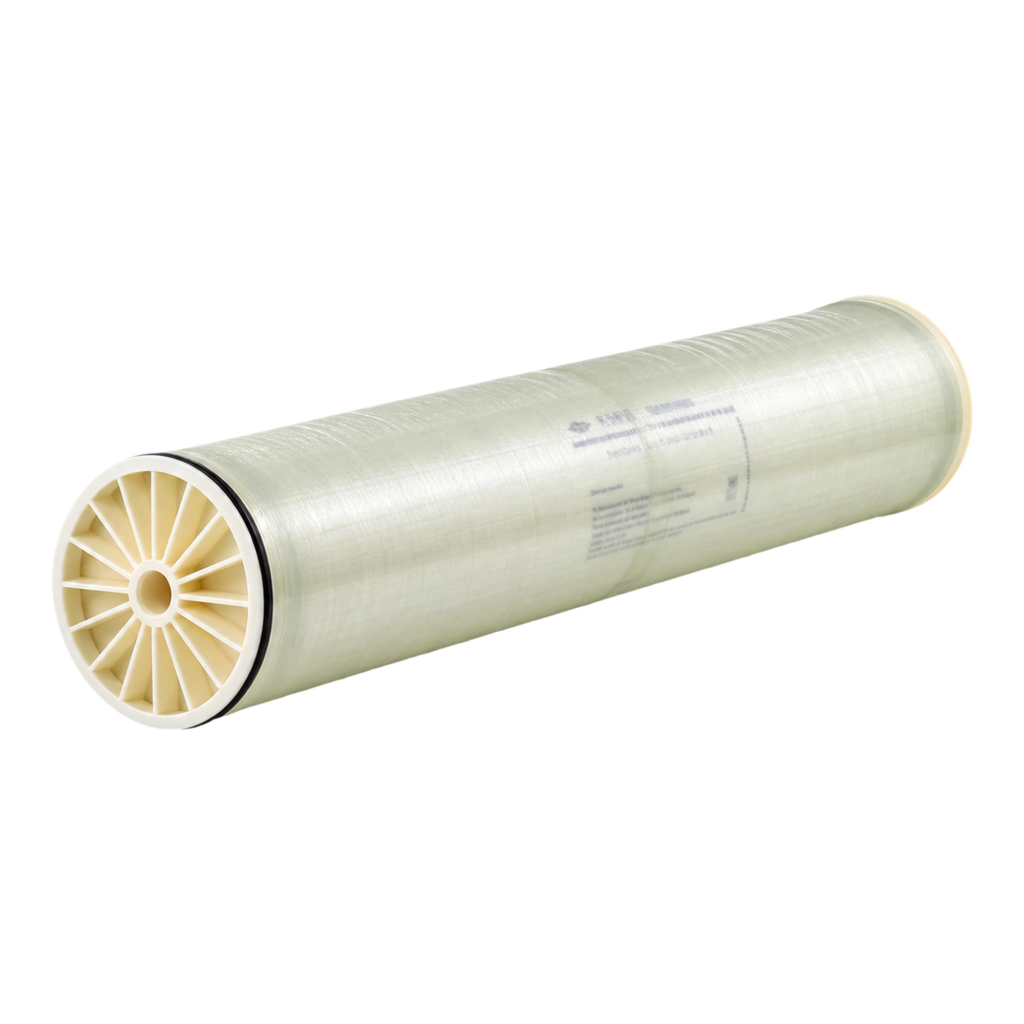
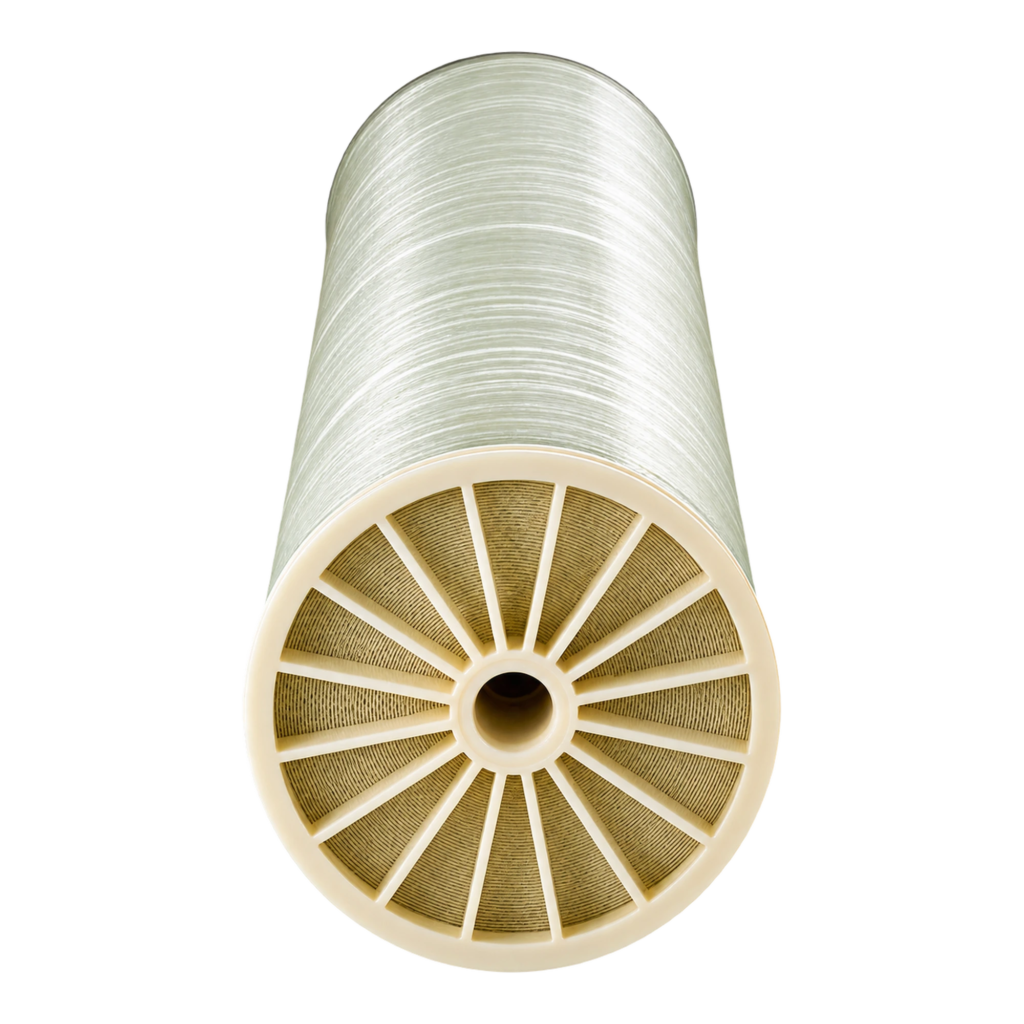
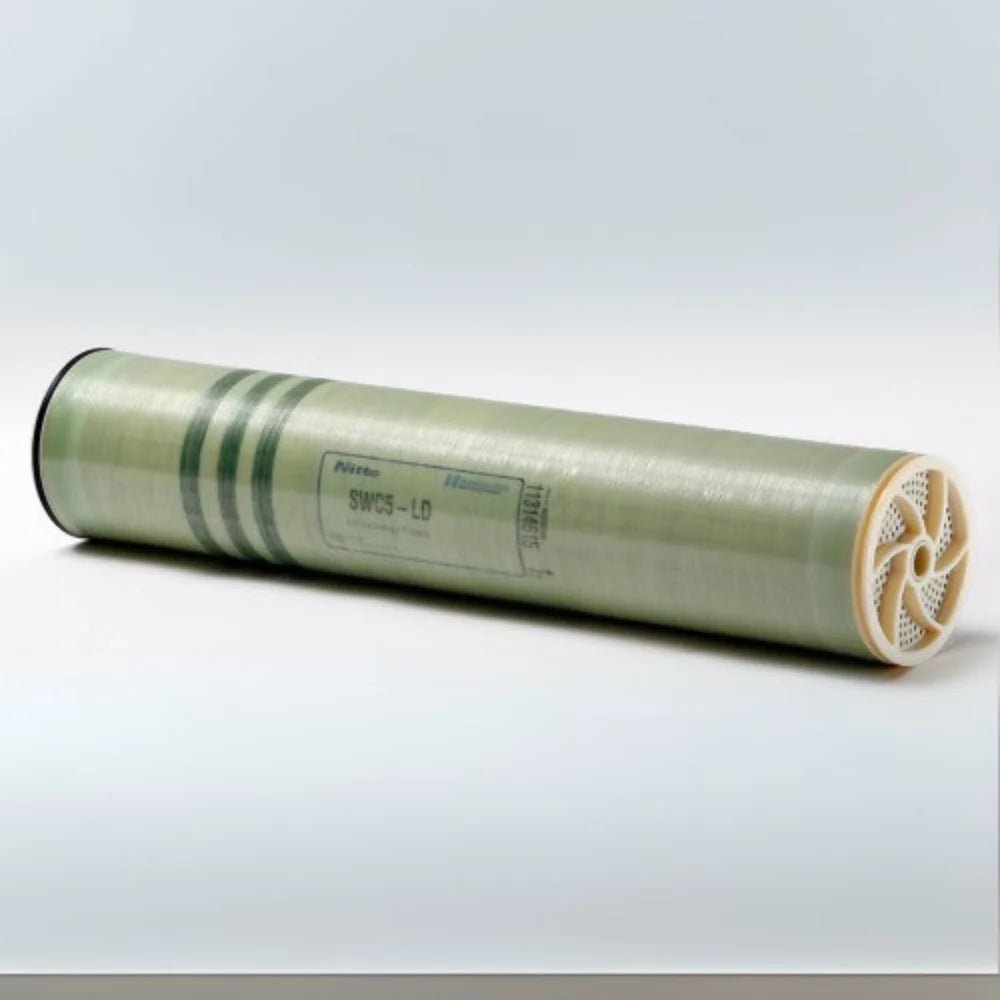
- Membranes: SWRO-rated elements in 8-inch FRP vessels rated 1,000 psi
- High-pressure pump: Stainless steel multi-stage with VFD
- Energy recovery: Pressure exchanger option
- Pre-treatment: Intake strainer, dual media filter, 5 micron cartridge, antiscalant dosing
- Recovery: 35-45%
- Controls: PLC panel with conductivity monitoring and auto-flush
- Quality: ISO 9001:2015 certified design and build
Energy Recovery and Running Cost
Energy is the largest running cost on any plant this size. Without recovery, a seawater desalination system of this capacity draws 4-6 kWh per m3. With a pressure exchanger fitted, that falls to 2.5-3.5 kWh per m3 because hydraulic energy in the reject stream is recycled back into the feed. Across a year of continuous operation that is a 40-50% cut in electricity, roughly OMR 3,000-6,000 saved, and the device usually pays for itself inside two to three years.
Pre-Treatment and Product Water Quality
Pre-treatment decides membrane life. Beach well intakes give lower turbidity and longer element life than open intakes, so we recommend them wherever site geology allows. Where an open intake is unavoidable, we add a dual media filter and increase cartridge change frequency. Permeate leaves the membranes at very low mineral content, so a calcite remineralisation column is offered where the water feeds a drinking system rather than a process line. Chlorination and UV disinfection options are available for storage tank protection.
Applications Across Muscat and Oman
Coastal resorts and hotels, island and remote community supply, offshore and jetty installations, aquaculture farms, coastal industrial plants, and camp or military sites along the entire Oman coastline. Where feed water is brackish rather than full-strength seawater, an industrial RO plant is the lower-cost route.
Installation, Commissioning and AMC
Supply covers civil and mechanical layout drawings, installation, chemical commissioning, performance testing and a written commissioning report. Operators get hands-on training before handover. Annual maintenance contracts cover quarterly inspections, membrane performance testing, chemical cleaning and consumable replacement. Spares are stocked in Muscat, including RO membranes, filter cartridges, dosing pumps and RO chemicals. Product water quality is assessed against the WHO Guidelines for Drinking-water Quality.
Frequently Asked Questions
How much brine does a 50 m3/day seawater desalination system reject?
At 45% recovery the plant rejects roughly 60 m3/day of concentrate. Coastal sites discharge through a seawater return outfall positioned away from the intake. Inland sites need lined evaporation ponds sized to local evaporation rates.
Can the capacity be increased later?
Yes. The skid is laid out with spare vessel space and the pump is selected with headroom, so a further train can be added. For smaller requirements we also supply a 10 m3/day seawater desalination plant.
What routine maintenance is needed?
Cartridge changes every 4-8 weeks depending on intake quality, antiscalant top-up, monthly performance logging, and chemical cleaning every 3-6 months. Membranes typically last 3-5 years on a well-run plant.
Do you install outside Muscat?
Yes. We cover all Muscat governorate areas and deliver, install and service in every wilayat in Oman.
For sizing, budget pricing or a site survey, contact UV Water Systems on +968 9763 7786.

Reviews
There are no reviews yet.